Staff are pasting sensitive data into chatbots, Copilot can surface anything a person is allowed to reach, and agents are starting to act on their own. The risk is not the technology, it is adopting it without guardrails. We put the policy, governance and data security in place so you can move fast without moving blind.
A practical programme that turns AI from an unmanaged risk into a governed capability.
Anyone who tells you otherwise is selling. Each platform leads at a specific job. We start with what you already own, then add best-of-breed only where there is a real gap. See exactly where you are covered, and where you are exposed.
Almost every organisation we work with already owns Microsoft 365. That makes Purview, Entra and Defender the natural foundation, and the only engine that writes a sensitivity label Copilot will honour. The other platforms aren't replacements. They reach into the places Microsoft structurally doesn't.
Most of the foundation is already licensed under E3 or E5. We light up what you're paying for before recommending anything new.
A second platform earns its place when there's a job Microsoft can't do well: data beyond M365, runtime, inline control, insider exfiltration.
Best-of-breed discovers and classifies; Microsoft enforces. A shared classification taxonomy is what turns separate tools into one system.
Sensitive data lives and moves across four distinct planes. Each platform was engineered for one of them. Understanding which plane your risk sits on is how you choose, not a feature checklist.
SharePoint, OneDrive, Teams, Exchange. The data Copilot reads, and the labels that decide what it can surface. Content-centric, at rest.
AWS, Azure, GCP, Snowflake, databases, data lakes, on-prem file shares, shadow and orphaned data Microsoft can't see.
Web, SaaS, cloud egress, API and container traffic, the moment sensitive data moves to an unsanctioned app or a free AI tool.
Email, the browser, the endpoint. Insider exfiltration, copy-paste into ChatGPT, BYOD and unmanaged-device access, the human moment of risk.
The four planes cover where your data lives. AI adds a second layer on top: the live interaction between your people, your agents and the models. A complete answer secures both.
Thirteen jobs to be done, honest answers per platform. Pick what you're trying to achieve with AI, tell us what you already own, and the map shows what matters at your stage, where you're covered, and where the genuine gaps are.
Ratings reflect each platform's GA positioning and are kept defensible against vendor and Microsoft documentation. Click a job to see the best-fit call. Click a platform name to focus its column.
The discovery tells us which of these you're closest to. Here's how we'd sequence the fix in each case, leading with the platform that genuinely fits.
The platforms aren't rivals in a good design, they're a relay. Best-of-breed tools discover and classify across the planes Microsoft can't reach, then feed that classification into Purview, which enforces it for Copilot and DLP inside Microsoft 365. The loop closes with continuous monitoring.
Our AI readiness assessment is the Microsoft-centric first step. We assess your SharePoint, OneDrive and Microsoft 365 tenant against seven gates, then hand you a prioritised report and a phased roadmap. It shows exactly what to fix before you connect Copilot, ChatGPT Enterprise, Claude or any AI to your data, in what order.
Stage 1, Productivity AI. Assess, plan, build and hand over.
Brochures, guides and an on-demand webinar to move from awareness to action. No vendor pitch.
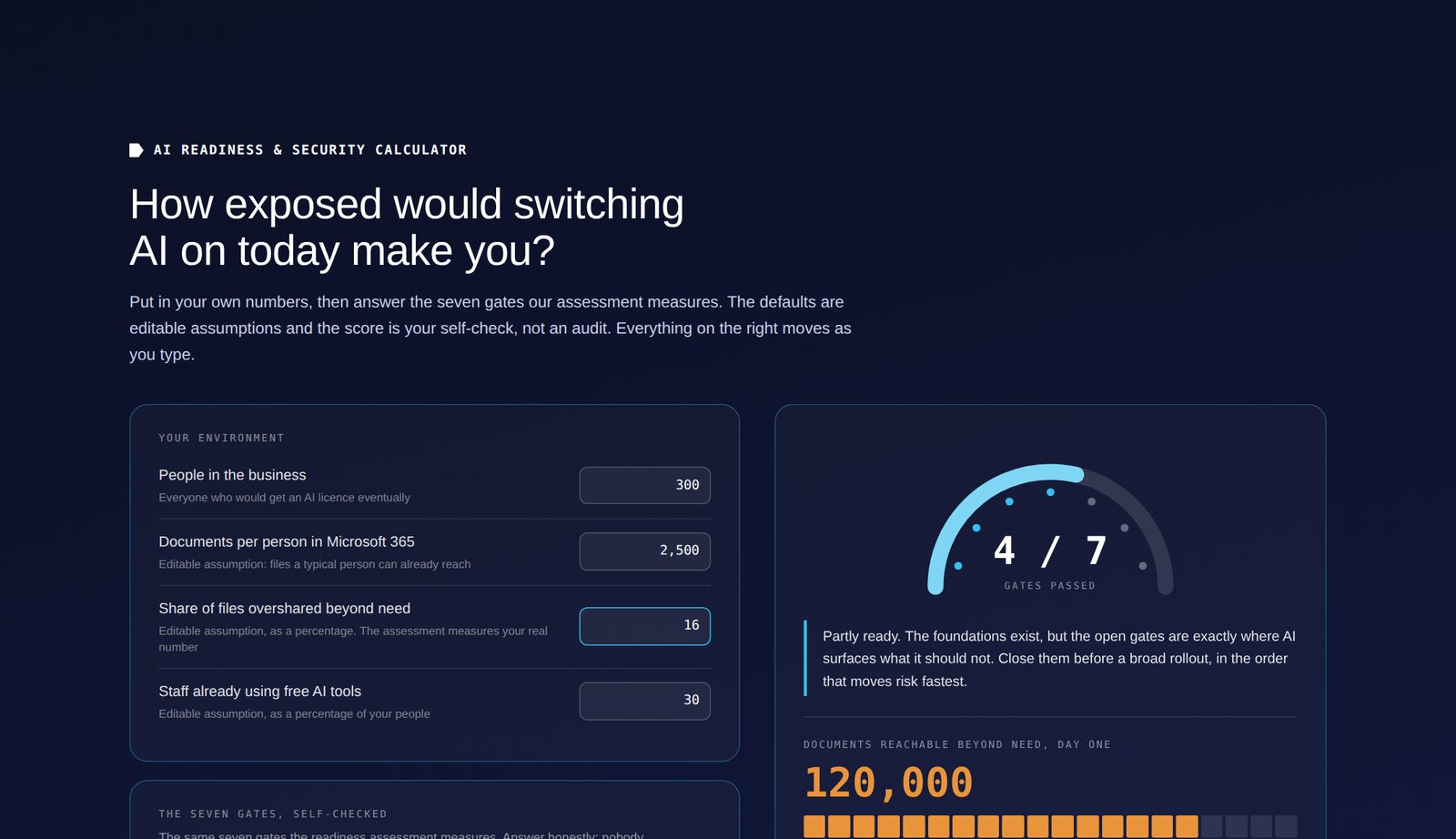
Put in your people and data, pick your AI ambition and Microsoft level, then self-check the seven gates. Exposure, coverage and gaps move live.
Open the calculator
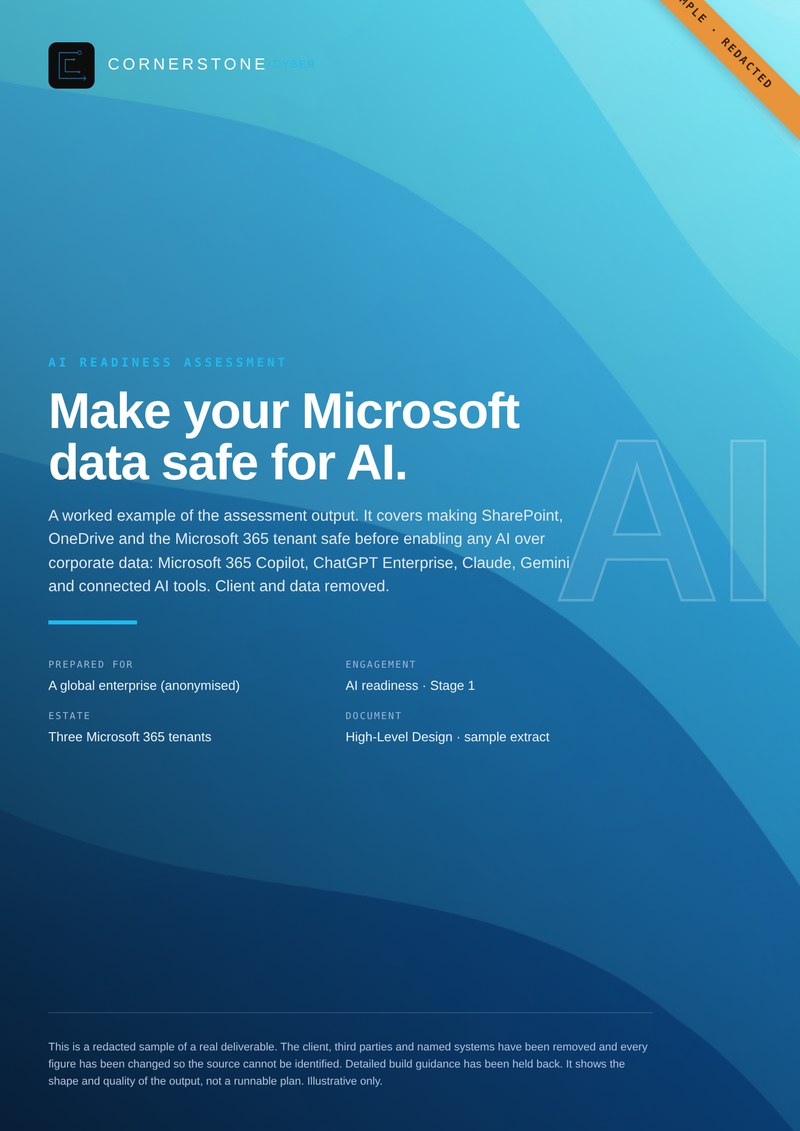
A redacted view of the AI readiness output: executive summary, seven-gate scorecard, prioritised findings and a phased roadmap. Covers Copilot, ChatGPT Enterprise, Claude and connected AI.
Open sample
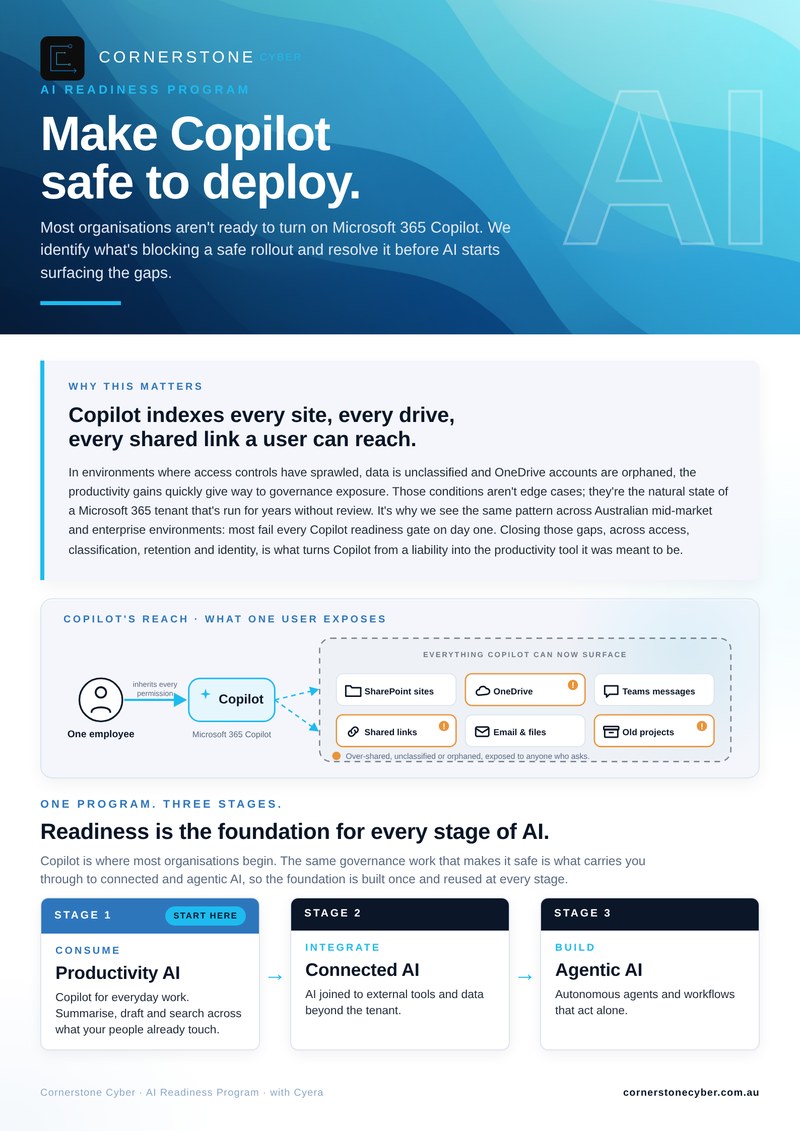
How we make Microsoft 365 and Copilot safe to switch on, with Cyera data security posture management.
Open brochure
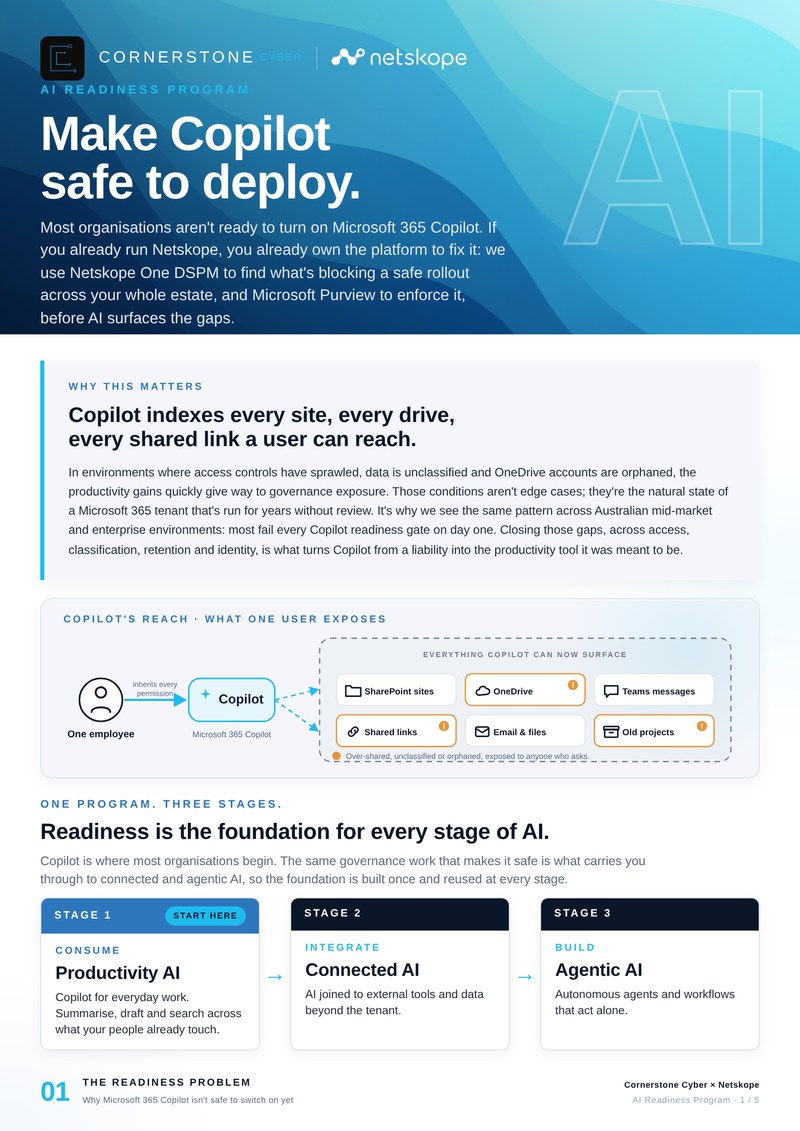
Controlling what staff put into AI tools, and what those tools can reach, with Netskope.
Open brochure
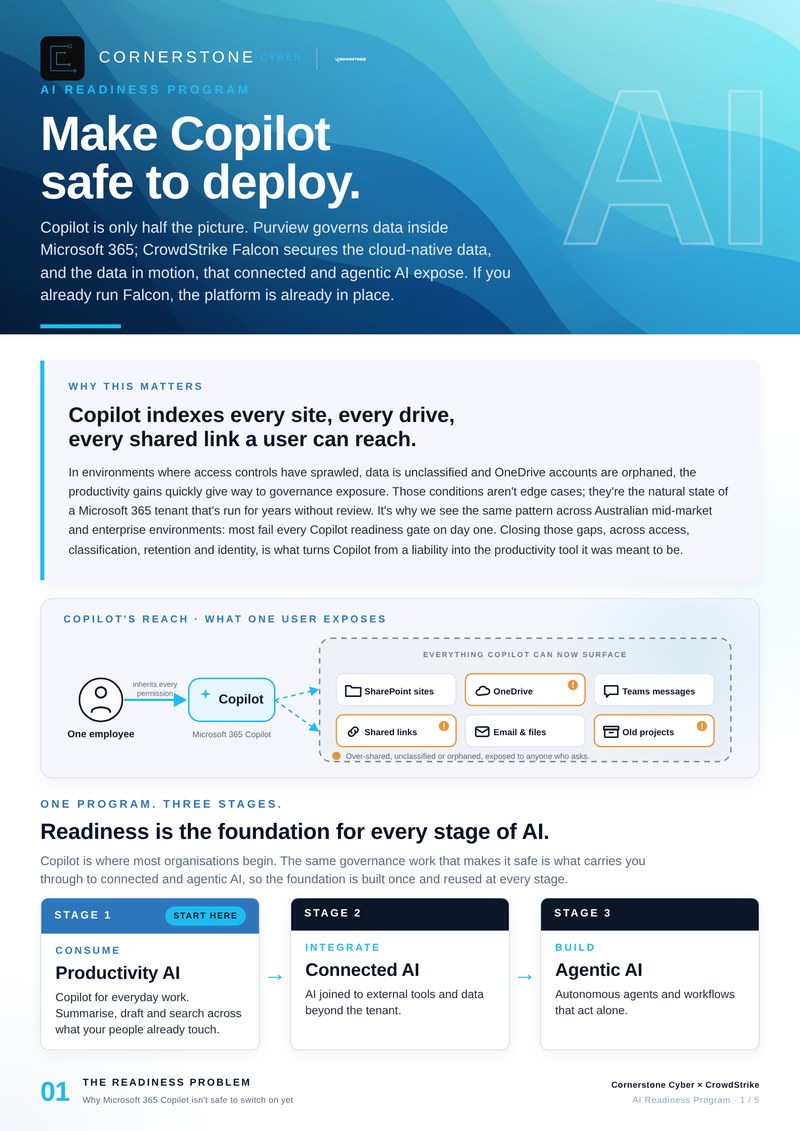
Securing AI where it executes, with CrowdStrike Falcon across identity and endpoint.
Open brochure
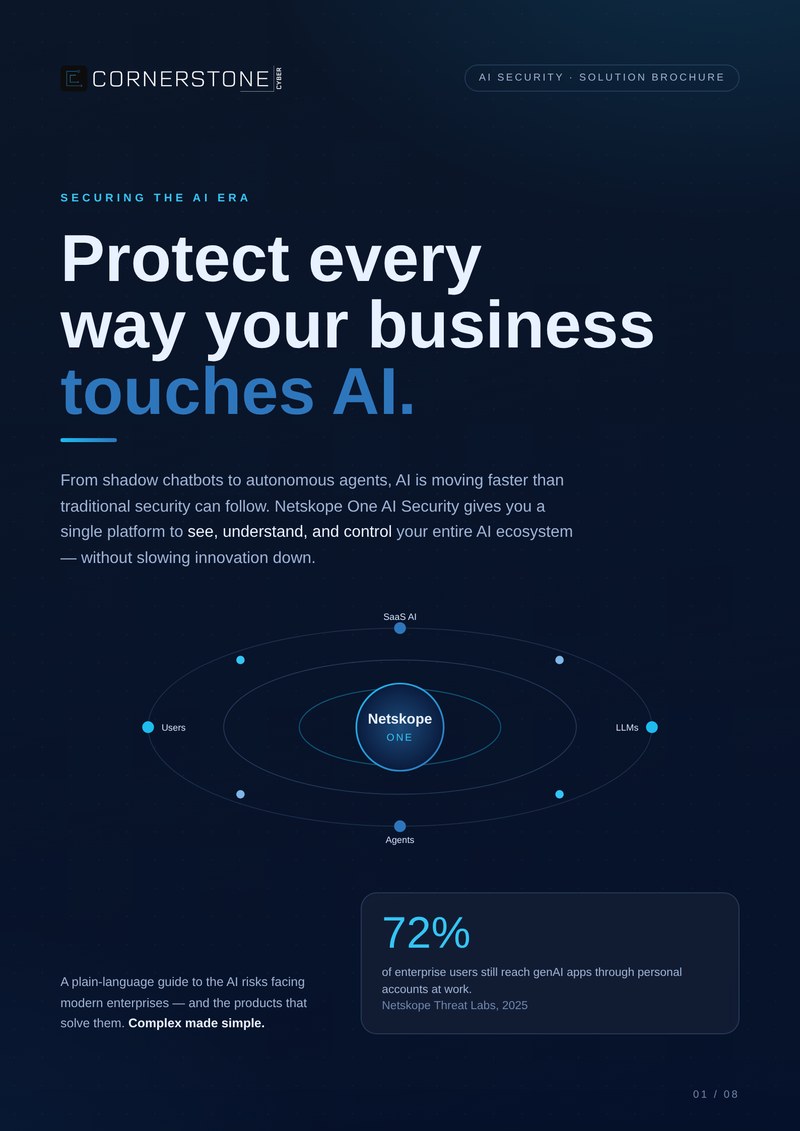
See, understand and control your entire AI ecosystem, from shadow chatbots to autonomous agents, with Netskope One AI Security.
Open brochure
A board-level look at how Copilot and everyday AI tools quietly surface sensitive data, with real Microsoft 365 examples.
Watch the replay
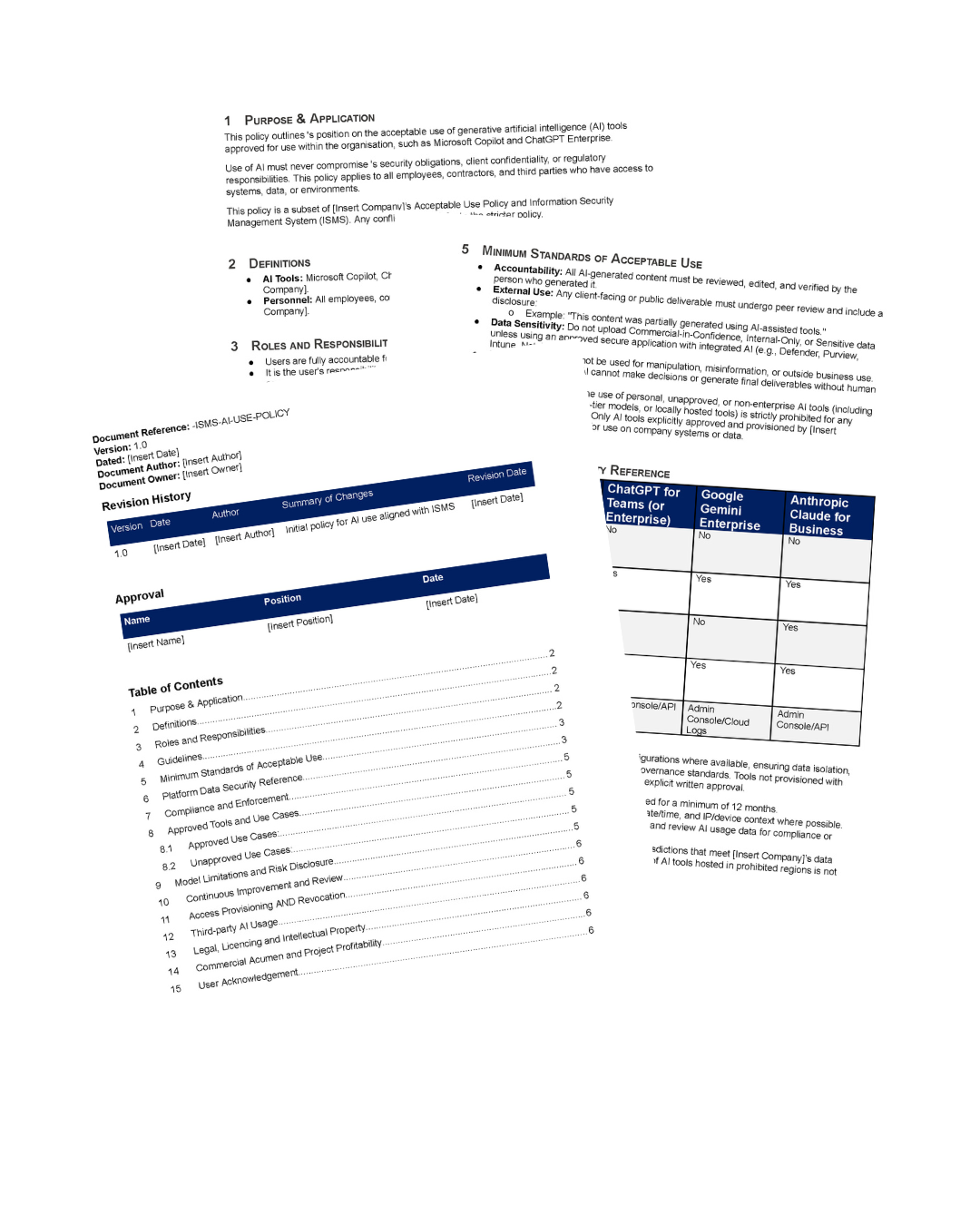
A customisable acceptable-use and governance policy for AI: usage guidelines, privacy rules and a framework you can adapt in an afternoon.
Get the template
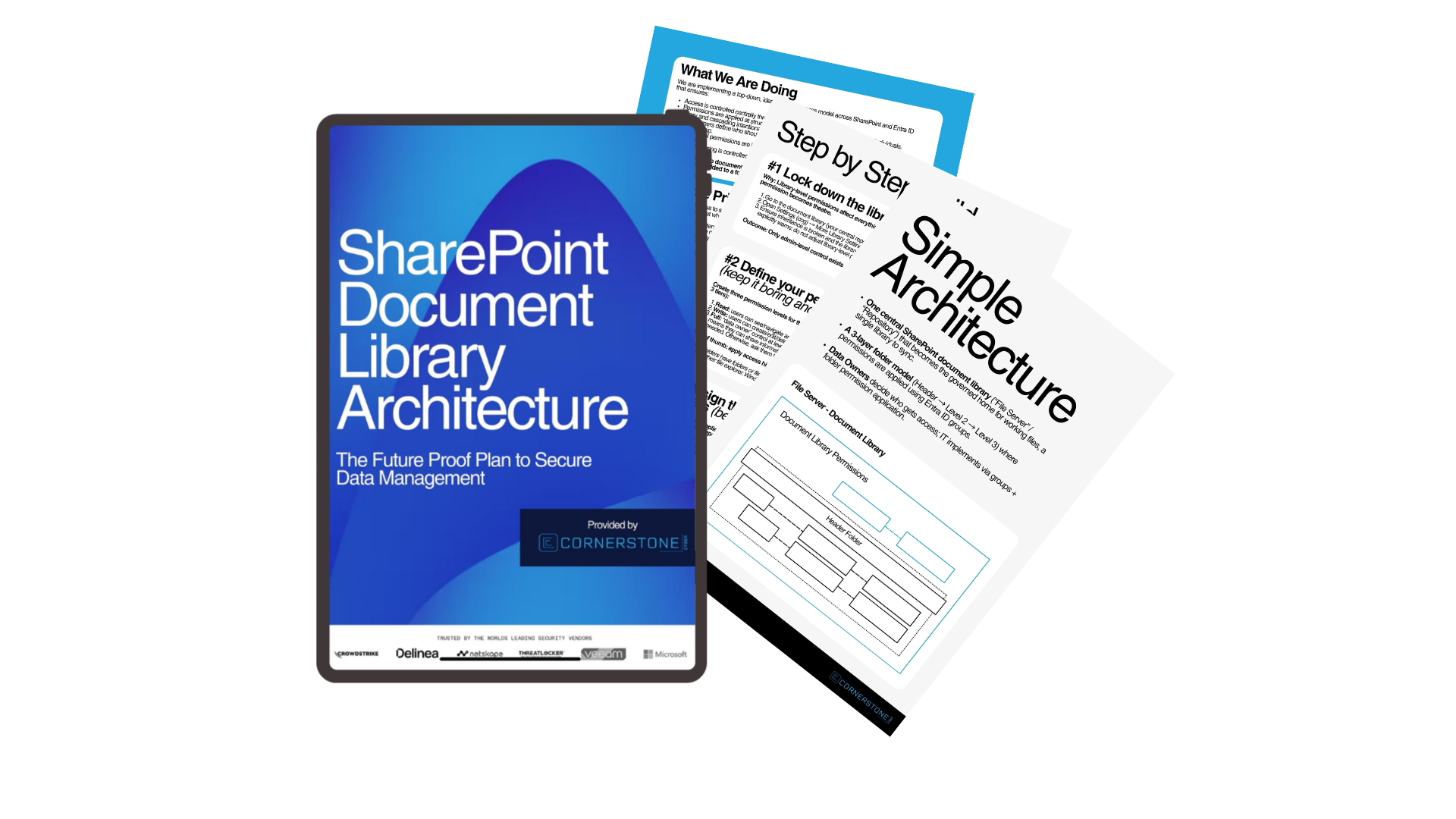
The future-proof plan to secure data management: a central library, a three-layer folder model, and access controlled by Entra ID groups.
Download the guidePlain answers on Copilot, Skope AI guardrails and shadow AI.
Generative AI inherits the permissions of the person using it. Microsoft 365 Copilot can read every file the user can read, so any over-shared SharePoint folder or stale permission becomes a one-click discovery.
Not new data, but data your users could already find through search if they looked hard enough. Copilot makes that latent exposure trivial and instant. The fix is sensitivity labels, data access governance, and tightening permissions before you turn it on.
It sits inline between users and AI apps, both sanctioned (Copilot, ChatGPT Enterprise) and unsanctioned (public ChatGPT, Gemini, Claude). It applies DLP to prompts and uploads, blocks risky use, and gives visibility into what your people feed AI.
Strongly recommended. Sensitivity labels drive downstream protection: Copilot honours labels in queries and outputs, and Purview DLP can stop labelled content from being shared inappropriately.
Netskope sees and controls it. We can block, coach (warn the user) or apply DLP to public AI tools, so people are not pasting client data into a free model.
A short AI Readiness assessment: where your data lives, what is labelled, what Copilot would see today, and what your people are using already. From that we build a costed roadmap to safe rollout.
A short, fixed-scope assessment shows what you already own, what it covers, and the one or two gaps worth closing, with a costed plan and no vendor agenda. You get the right stack for your risk, not the biggest bill.